

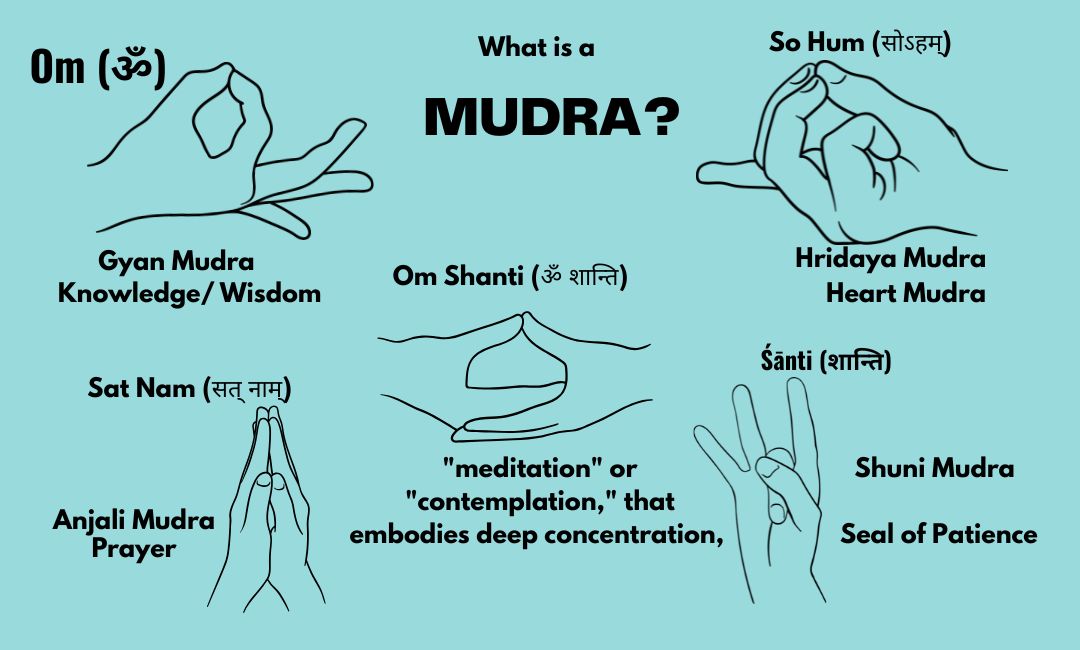
A mudra is a symbolic hand gesture or position used in yoga, meditation, and spiritual practice. The word “mudra” comes from Sanskrit and can be translated as “seal,” “mark,” or “gesture.” In practice, mudras are a way to channel energy in the body, calm the mind, or support certain intentions during meditation.
Why Use Mudras?
-
They can help focus the mind and improve concentration.
-
They may encourage a sense of calm or relaxation.
-
They can subtly influence the flow of energy in the body (prana).
-
They help you connect body, mind, and breath in a simple, physical way.
How to Use a Mudra
-
Choose a comfortable position – sitting or lying down, keeping your spine straight.
-
Form the mudra with your hands – usually touching the tips of certain fingers together.
-
Focus on your breath – inhale and exhale slowly, noticing the sensation in your hands and body.
-
Set an intention – you can silently repeat a mantra, affirmation, or simply rest in awareness.
-
Practice regularly – even a few minutes can make a difference.
Examples of Simple Mudras for Beginners
-
Gyan Mudra (Tip of index finger touches tip of thumb) – encourages clarity and calmness.
-
Prana Mudra (Tips of ring and little fingers touch thumb) – boosts energy and vitality.
-
Anjali Mudra (Palms together at heart centre) – symbolises gratitude and balance.
Think of mudras as a “tool for your hands” that helps your mind settle, your body feel more aligned, and your energy flow more smoothly.

Carolynn Binnie Post Author
I joined the wellbeing industry in 1994 and I've spent my lifetime helping people move from negative stress to a more fufiling and happy mindset.